
You've seen the diamond-shaped labels on parcels — the flame symbol, the skull and crossbones, the radiation trefoil. Dangerous goods move through courier networks every day: lithium batteries in laptops and phones, aerosol cans, cleaning chemicals, perfumes, paint, medical specimens, and yes — even low-level radioactive materials used in medical and industrial applications. If you're carrying DGs in your van, there are legal obligations you need to understand. Getting it wrong isn't just a workplace issue — it's a criminal offence under the Australian Dangerous Goods Code.
The DG Classes You'll Encounter
According to the National Transport Commission dangerous goods information, dangerous goods are classified into nine classes. As a courier driver, you're most likely to encounter:
Class 2 — Gases: Aerosol cans (deodorant, spray paint, cooking spray). Common in B2C deliveries. They're pressurised and can explode in extreme heat.
Class 3 — Flammable Liquids: Perfumes, nail polish, hand sanitiser, paint, solvents. Many cosmetics and cleaning products fall here.
Class 8 — Corrosives: Cleaning chemicals, pool chemicals, battery acid. These can cause severe burns if packaging fails.
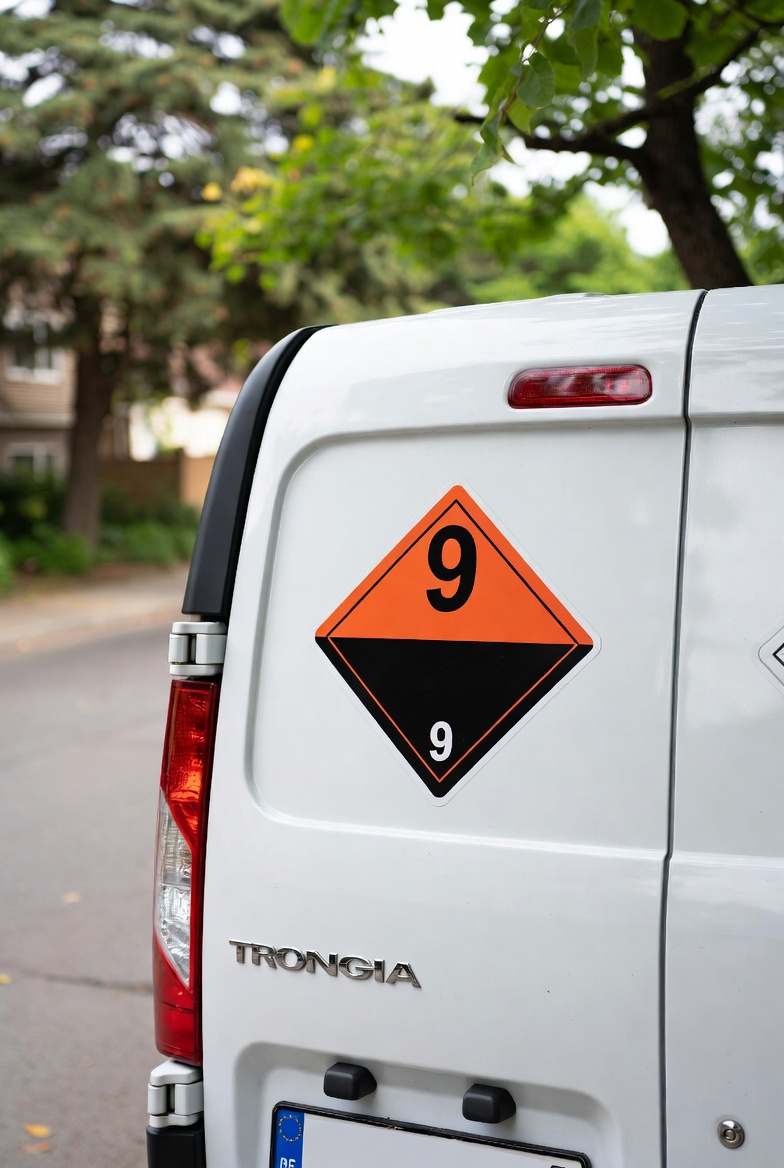
Class 9 — Miscellaneous: Lithium batteries (Class 9). This is by far the most common DG in modern courier work. Every laptop, phone, power bank, and e-bike battery is Class 9. Lithium batteries can catch fire or explode if damaged, short-circuited, or exposed to extreme heat.
Class 7 — Radioactive: Rare in general courier work, but some specialist couriers transport low-level radioactive materials for medical imaging, laboratory testing, or industrial gauges. These have specific handling, packaging, and transport document requirements that go well beyond standard DG rules.
Your Obligations as a Driver
Training: If you're transporting DGs above certain thresholds, you need DG awareness training. Most courier companies provide this as part of induction. If yours hasn't, ask — it's a legal requirement, not optional.
Segregation: Different DG classes cannot be stored together. Flammable liquids and oxidisers, for example, must be kept apart. In practice, this means not loading a box of aerosols next to a box of pool chlorine. Your depot should handle segregation during sorting, but check your load.
Placarding: Vehicles carrying DGs above certain quantities must display diamond-shaped placards indicating the class of goods on board. For detailed placarding requirements, see the SafeWork SA transport of dangerous goods guide. Your company manages this, but know that if your van is placarded, you're subject to additional rules around parking, tunnels, and routes.
Documentation: DG consignments must have a DG declaration or transport document. This should be with the freight. If you're carrying DGs and there's no documentation, flag it with your supervisor before leaving the depot.
Emergency procedures: Know what to do if DG packaging fails — a leaking chemical, a swelling lithium battery, a hissing aerosol. Don't touch it. Ventilate the area. Call your supervisor and, if necessary, emergency services. Don't try to contain a DG spill yourself unless you're trained to do so.
Practical Tips
Don't leave DGs in a hot van. Aerosols and lithium batteries are especially sensitive to heat. A van in direct sun can reach 60–70°C inside. Park in shade where possible and don't leave DG freight sitting overnight in summer.
Handle with care. DG packaging exists for a reason. Don't drop, throw, or crush DG-labelled parcels. A damaged lithium battery is a fire risk. A cracked aerosol is an explosion risk. Treat every DG parcel as if the contents could cause you harm — because they can.