
Not every delivery is a flat suburban street with a nice concrete driveway. Some days you're navigating a 30-degree gravel driveway that's more like a goat track, reversing down a narrow rural lane with no turning circle, or walking 200 metres up a muddy hill because the van can't make it any further. Difficult terrain is part of the job — and knowing how to handle it safely separates good drivers from the ones who damage vans and injure themselves.
Steep Driveways
Steep driveways are everywhere in hilly suburbs — and they're one of the biggest causes of van damage and roll-away incidents. Before driving up, assess whether you can get back down safely. A loaded van going down a steep wet driveway with inadequate brakes is terrifying. For general driving safety guidance, see RACQ driving tips.
Going up: Approach with momentum but not speed. If you stop halfway up a steep gravel driveway, you may not get going again without wheel spin. Commit to the climb once you start.
Going down: Use low gear and engine braking. Don't ride the brakes — they'll overheat. If the driveway is too steep to reverse down safely, consider whether you should have parked at the bottom and walked up in the first place. Handbrake on at the top. Always.
Gravel and Dirt Roads
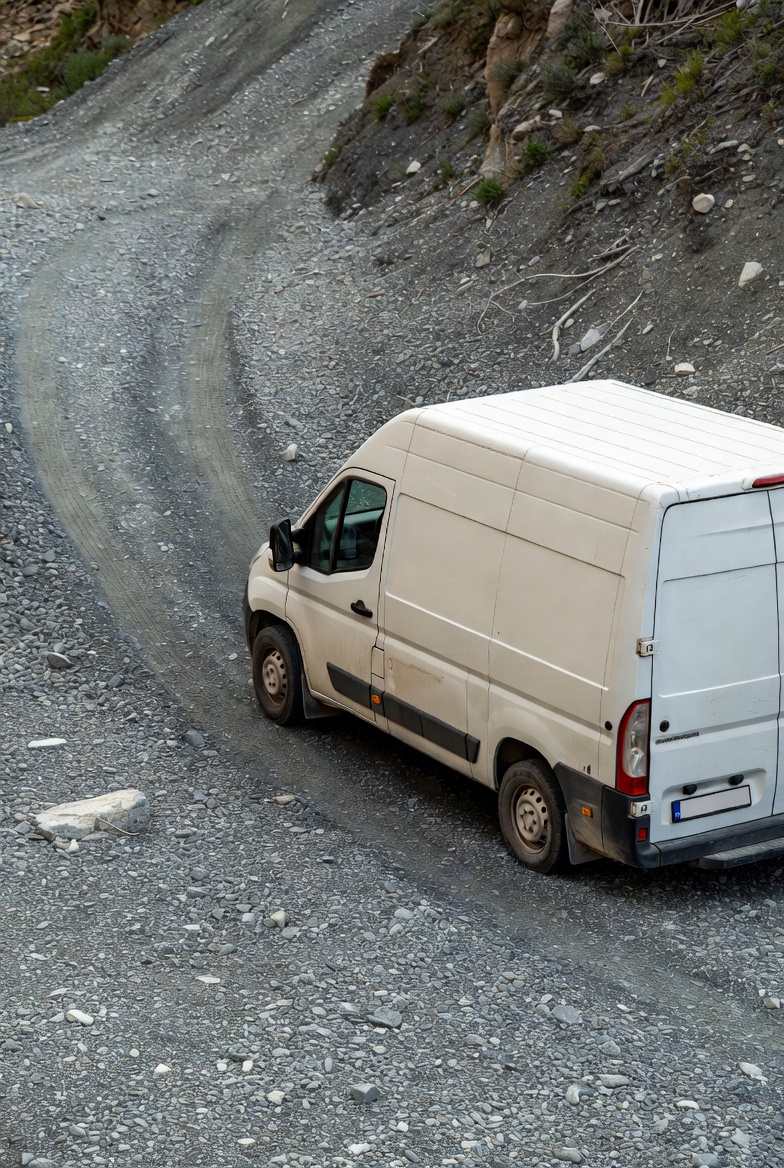
Gravel reduces your traction significantly. Braking distances are longer, steering is less responsive, and your van will slide if you corner too fast. Reduce speed by at least 20% on gravel compared to sealed roads. Accelerate and brake gently — sudden inputs cause skids.
Corrugated dirt roads (washboard roads) are common in regional areas. The temptation is to speed up because the vibration decreases at higher speed — but you're actually reducing your control. Maintain a moderate, consistent speed and let the suspension do its job.
When to Walk Instead of Drive
Sometimes the smartest move is to park the van on solid ground and carry the parcel in on foot. This applies to: driveways you're not confident you can reverse out of, soft or muddy tracks after rain, narrow lanes where turning is impossible, and properties with gates you'd need to open and close.
Carrying a parcel 100 metres takes two minutes. Recovering a bogged van takes an hour. Repairing a van that slid off a steep driveway takes a week and costs thousands. The maths always favours walking when terrain is questionable.