
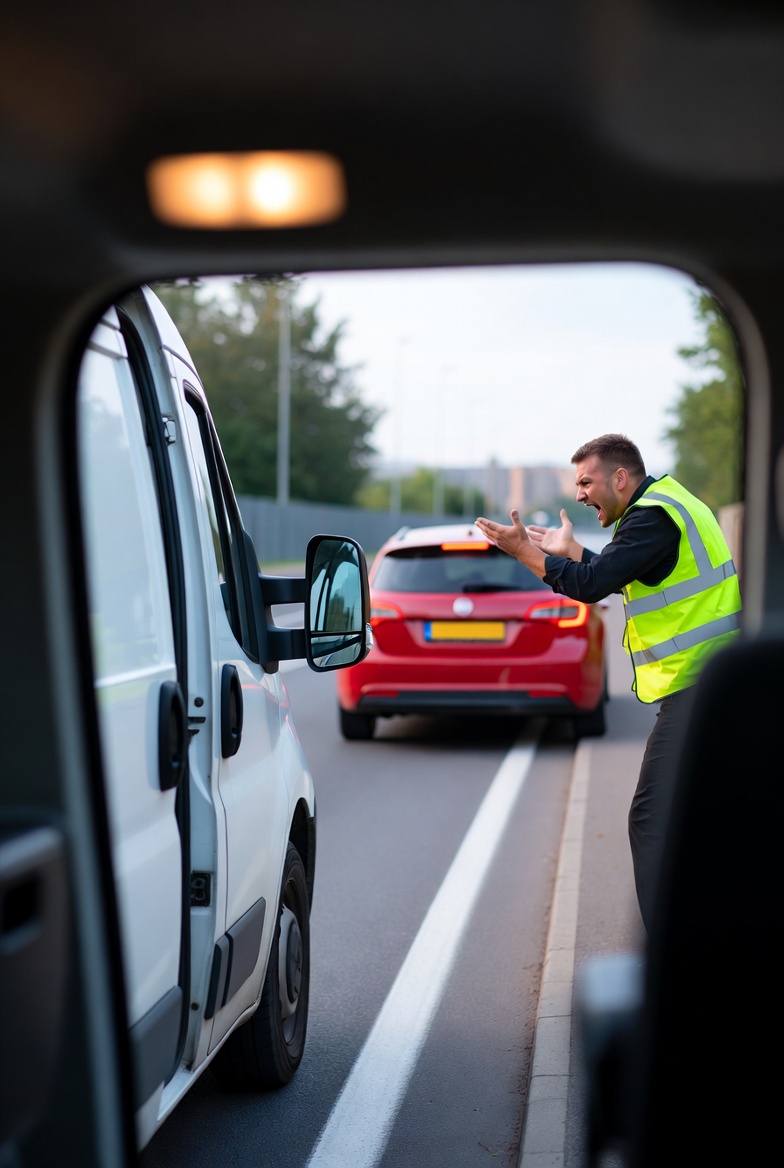
You're double-parked with your hazards on, scanning a parcel at the door, and someone's leaning on their horn behind you. You pull over to let them pass and they slow down to scream something out the window. Or you're doing the speed limit in a residential street, stopping every 50 metres, and the car behind you is so close you can see their fillings. Welcome to delivery driving — where road rage comes with the territory.
Why Couriers Cop More Road Rage
Delivery drivers do things on the road that infuriate other motorists — and most of the time, we have no choice. Double-parking to deliver is often the only option on narrow streets. Frequent stops in residential areas mean we're constantly slowing down, pulling over, and pulling out. We drive large vans that block visibility and take longer to accelerate. We're checking addresses on our phones (hands-free) while driving slowly.
None of this justifies aggressive behaviour from other drivers, but understanding why it happens helps you stay calm when it does. According to RACQ aggressive driving resources, aggressive driving is a significant road safety issue and the best response is always to avoid engagement.
The reality is that most people don't understand what you're doing. They see a van blocking their street and get frustrated. They don't see the 130-stop manifest, the time pressure, or the fact that you've already had three people yell at you today. Their anger isn't personal — even though it feels like it is.
Common Triggers and How to Minimise Them
Double-parking: Where possible, find a legal spot — even if it means walking an extra 30 metres. When you have to double-park, put your hazards on immediately, be as quick as possible, and acknowledge waiting drivers with a wave or a "sorry, one second" gesture. Most people calm down when they feel seen.
Slow driving: If someone's tailgating you in a residential street, pull over and let them pass. It takes 5 seconds and removes the tension. Don't speed up to appease them — you'll miss your stop and be less safe.
Pulling out from stops: Always check mirrors and blind spots when pulling back into traffic. Other drivers don't expect a parked van to suddenly move. Signal early and pull out smoothly.
Blocking driveways: Never block a driveway for more than the absolute minimum time. If you see someone waiting to get out, move immediately. This is one of the fastest ways to escalate a confrontation.
De-Escalation
Don't engage. The most important rule. Don't make eye contact with aggressive drivers, don't respond to gestures, don't yell back. Any response — even a defensive one — escalates the situation. Let them shout and drive away.
Stay in your van. If someone gets out of their car and approaches you, keep your doors locked and windows up. You are not obligated to interact with anyone who is being aggressive. If they become threatening, drive away and call the police.
Don't take it personally. This is the hardest one. When someone screams at you, your body floods with adrenaline and your natural response is fight or flight. But this person isn't angry at you — they're angry at the situation. Let them be angry. Your job is to finish your run safely, not to win an argument with a stranger.
Dashcam. If you don't have one, get one. A dashcam protects you if an aggressive driver causes an incident and then blames you. It's also useful if someone damages your van and drives off. Dashcams cost $50–$150 and can save you thousands in disputed claims.